Yet another part of my whirl-wind adventure with my grandmother and aunt was a trip to the grand city of Brussels. And can I just say.... WOW!
HISTORY
Independence
A revolution which preceded the achievement of independence, started on 24 August 1830. By July 1831, Leopold I was declared king. Subsequently, Brussels began to expand and new city districts were added in the 19th and 20th century which resulted in the demolition of the old city walls. Brussels gathered momentum as a place of libertarian thinking and as such provided a haven for people like Baudelaire, Marx and Hugo. Although production and facilities expanded, the overflow of population created a situation of inadequate housing. The second king, Leopold II, faced both these domestic issues as well as Belgium' s colonial decisions in Congo.
The 20th century
The beginning of the century saw a flourishing of Art Nouveau style in Brussels under the aegis of king Albert I, but this period came to an abrupt end as Belgium was occupied by the Germans in the First World War despite its neutrality. Flanders saw the worst of the warfare and today provides a resting place for the thousands of soldiers who died there. With the Peace treaty of 1919, Belgium gained the German-speaking area in the southeast.
The country barely had time to breathe as it was again occupied by the Germans in 1940, after which king Leopold III surrendered to them. After the war ended, the king, who had resided in Germany towards the end of the Second World War, was suspected of Nazi collaboration and abdicated in 1951. The throne was taken by his son Baudouin, later to be succeeded by Albert II.
The economic boom of the 1960-s and recession of the 1970-s and 1980-s gave way to Brussels' stature as the heart of Europe, as in 1958 it became the headquarters of the then European Economic Community (now the European Union), as well as NATO in 1967. Nowadays Brussels not only functions as the political and business centre of the region but also as the headquarters of many world famous corporations.
http://www.brussels.org/history/
Okay well there you have the historical significance of Brussels.... most of which I just learned on google.
When my family (My Aunt Colleen and Grandmother Sandy) decided to come and visit, I took on the responsibiltiy of finding places for everyone to enjoy. Of course, the majority of our time would be spent in Spain (Madrid, Toledo and Granada) but I also wanted to check out someplace new for me.
We'd travelled to England and France in previous years. My grandmother was planning a trip to Greece the following year. I was heading to Germany for Spring Break. And there was no way to do Italy or anything in Asia for the time span we had. So I was open to suggestions when a few colleagues suggested Belgium. I wanted something very lavish without the lavish prices and language barriers. I had never thought about traveling to Belgium but after so many people raved about the over-the-top city centers and lush country side and abundant food and beer supplies, I knew I had found our destination.
The three of us arrived in Brussels not really knowing what to expect except for a few map printouts and google city searches. Boy or boy, were we surprised. The way this city manages to mix the old world with the new is breathtaking. The Baroque facades found in the main square mixed with the gleaming metal of the EU headquarters is jaw-dropping. The elusive little peeing-boy that we spent 3 days hunting down added that comical touch we desperately needed. The people... amazing! The food.... savory! The dessert... pants-expandingly delicious! The beer.... YUUUM! I can't say enough about this city.
Since all three of us were tourists instead of my usual role as guide, we took the typical tour bus throughout the city. We relaxed and enjoyed our snazzy hotel. All three of us dined in the square and met an exuberant bunch of Norweigen men whom were awe struck by my grandmother (though we didn't dear tell them how we were related) We each split and went our seperate ways for an afternoon as I wanted to do more historical tours and the other wanted to relax and shop around. Unfortunately, my last morning there I came down with a weird bug that lasted the last 2 days of their trip to visit but even that couldn't take away from the magnificance of Brussels.
I completely recommend this city. I definitely wish I had more time to learn their history better. Enjoy the photos :-)
Showing posts with label culture. Show all posts
Showing posts with label culture. Show all posts
05 February 2011

21 January 2011
Granada (La Alhambra), Spain
A WORK IN PROCESS.... THIS IS GONNA BE A LONG ONE! :)
 Granada is one of the most important cities within Spain and in my opinion around Europe in terms of diversity and beauty. Located towards the sourthern part of the country, its warm tempertures and rich history make it a top tourist destination. I know it was for me and after being in Spain for well over a year, I felt a bit ashamed that I had never made it down to the infamous Alhambra. Well, in late August my grandmother Sandy and aunt Colleen made their first trip to Spain to come visit me. I took a few days off of work to travel with them so what a perfect opportunity it was to discover this breath-taking city together!
HISTORY
Granada’s history reads like an excellent thriller, with complicated plots, conspiracies, hedonism and tricky love-affairs. Granada began life as an Iberian settlement in the Albayzín district. Muslim forces took over from the Visigoths in 711, with the aid of the Jewish community around the foot of the Alhambra hill in what was called Garnata al Jahud, from which the name Granada derives; granada also happens to be Spanish for pomegranate, the fruit on the city’s coat of arms.
 After the fall of Córdoba (1236) and Seville (1248), Muslims sought refuge in Granada, where Mohammed ibn Yusuf ibn Nasr had set up an independent emirate. Stretching from the Strait of Gibraltar to east of Almería, this ‘Nasrid’ emirate became the final remnant of Al-Andalus, ruled from the increasingly lavish Alhambra palace for 250 years. Granada became one of the richest cities in medieval Europe, flourishing with its swollen population of traders and artisans. Two centuries of artistic and scientific splendour peaked under emirs Yusuf I and Mohammed V in the 14th century.
 It all went pear-shaped as the 15th century wore on: the economy stagnated and violent rivalry developed over the succession. One faction supported the emir, Abu al-Hasan, and his harem favourite Zoraya. The other faction backed Boabdil, Abu al-Hasan’s son by his wife Aixa. In 1482 Boabdil rebelled, setting off a confused civil war. The Christian armies invading the emirate took advantage, besieging towns and devastating the countryside, and in 1491 they finally laid siege to Granada. After eight months, Boabdil agreed to surrender the city in return for the Alpujarras valleys and 30, 000 gold coins, plus political and religious freedom for his subjects. On 2 January 1492 the conquering Catholic Monarchs, Isabel and Fernando, entered Granada ceremonially in Muslim dress. They set up court in the Alhambra for several years.
Religious persecution soon ensued. Jews were expelled from Spain, and persecution of Muslims led to revolts across the former emirate and their eventual expulsion from Spain in the 17th century. Lacking these talented elements of its populace, Granada sank into a deep decline from which it only began to emerge with the interest drummed up by the Romantic movement from the 1830s on. This set the stage for the restoration of Granada’s Islamic heritage and the arrival of tourism.

http://www.lonelyplanet.com/spain/granada/history
PLACES TO SEE
Which destinations should you visit on-foot? One is the Generalife Gardens. This is one of the world's loveliest gardens, and was once the home of Arab kings. But there's more to the gardens than pretty flowers. You can also view fantastic usages of water in the gardens. In fact, some people have compared the way that the water flows throughout the Generalife Gardens, as music or poetry.

The Alhambra from the 1300s is yet another major attraction that's worth climbing out of your rented car or truck, to see. This is where Moorish king governed Southern Spain until 1492. One of the must-see objects to view here is the fountain that faces the central courtyard. A set of 12 stone lions are used to support the magnificent fountain. Recently the fountain's big cats have been restored.
 (Unfortunately, the lions were moved into an enclosed area last year or so and not available to be photographed. Therefore, I had to take this pic from the internet. I wish I could have seen it in its original glory)
 Santa Ana is yet another destination that justifies parking your rented vehicle and then viewing. It's located at Plaza Nueva's northeast end. The features of this structure include an ornate doorway and a tower that resembles a minaret.
 Yet another site that you should include on a walking tour in Granada, is the Palacio Arzobispal. Known in English as the "Archbishop's Palace," this structure faces the Granada Cathedral's west side. It primarily dates back to the 17th century.
Another must-see site during your walking tour of Granada, is the Carmen de los Martires. The water nymph located at the entrance is one of the top sites to see here. Then once you enter the formal garden, you can also enjoy a terrace that contains tall palm trees. These trees help to shade a three-level fountain underneath. Then while walking along the path, you can also enjoy a viewing a huge circular pool. A statue of Neptune overlooks the large pool.
Visit the Convento de San Jeronimo. It's located southwest of the Hospital San Juan de Dios. The church's walls are adored with wall paintings from the 1700s. Take the time to view the figures of Gonzalo and his spouse, which are positioned on either side of the high altar.
Before arriving in Granada, you should book your hotel online. That will guarantee that you'll have accommodations once you arrive in the Spanish city.
 Granada is one of the most important cities within Spain and in my opinion around Europe in terms of diversity and beauty. Located towards the sourthern part of the country, its warm tempertures and rich history make it a top tourist destination. I know it was for me and after being in Spain for well over a year, I felt a bit ashamed that I had never made it down to the infamous Alhambra. Well, in late August my grandmother Sandy and aunt Colleen made their first trip to Spain to come visit me. I took a few days off of work to travel with them so what a perfect opportunity it was to discover this breath-taking city together!
HISTORY
Granada’s history reads like an excellent thriller, with complicated plots, conspiracies, hedonism and tricky love-affairs. Granada began life as an Iberian settlement in the Albayzín district. Muslim forces took over from the Visigoths in 711, with the aid of the Jewish community around the foot of the Alhambra hill in what was called Garnata al Jahud, from which the name Granada derives; granada also happens to be Spanish for pomegranate, the fruit on the city’s coat of arms.
 After the fall of Córdoba (1236) and Seville (1248), Muslims sought refuge in Granada, where Mohammed ibn Yusuf ibn Nasr had set up an independent emirate. Stretching from the Strait of Gibraltar to east of Almería, this ‘Nasrid’ emirate became the final remnant of Al-Andalus, ruled from the increasingly lavish Alhambra palace for 250 years. Granada became one of the richest cities in medieval Europe, flourishing with its swollen population of traders and artisans. Two centuries of artistic and scientific splendour peaked under emirs Yusuf I and Mohammed V in the 14th century.
 It all went pear-shaped as the 15th century wore on: the economy stagnated and violent rivalry developed over the succession. One faction supported the emir, Abu al-Hasan, and his harem favourite Zoraya. The other faction backed Boabdil, Abu al-Hasan’s son by his wife Aixa. In 1482 Boabdil rebelled, setting off a confused civil war. The Christian armies invading the emirate took advantage, besieging towns and devastating the countryside, and in 1491 they finally laid siege to Granada. After eight months, Boabdil agreed to surrender the city in return for the Alpujarras valleys and 30, 000 gold coins, plus political and religious freedom for his subjects. On 2 January 1492 the conquering Catholic Monarchs, Isabel and Fernando, entered Granada ceremonially in Muslim dress. They set up court in the Alhambra for several years.
Religious persecution soon ensued. Jews were expelled from Spain, and persecution of Muslims led to revolts across the former emirate and their eventual expulsion from Spain in the 17th century. Lacking these talented elements of its populace, Granada sank into a deep decline from which it only began to emerge with the interest drummed up by the Romantic movement from the 1830s on. This set the stage for the restoration of Granada’s Islamic heritage and the arrival of tourism.

http://www.lonelyplanet.com/spain/granada/history
PLACES TO SEE
Which destinations should you visit on-foot? One is the Generalife Gardens. This is one of the world's loveliest gardens, and was once the home of Arab kings. But there's more to the gardens than pretty flowers. You can also view fantastic usages of water in the gardens. In fact, some people have compared the way that the water flows throughout the Generalife Gardens, as music or poetry.

The Alhambra from the 1300s is yet another major attraction that's worth climbing out of your rented car or truck, to see. This is where Moorish king governed Southern Spain until 1492. One of the must-see objects to view here is the fountain that faces the central courtyard. A set of 12 stone lions are used to support the magnificent fountain. Recently the fountain's big cats have been restored.

 Santa Ana is yet another destination that justifies parking your rented vehicle and then viewing. It's located at Plaza Nueva's northeast end. The features of this structure include an ornate doorway and a tower that resembles a minaret.

Another must-see site during your walking tour of Granada, is the Carmen de los Martires. The water nymph located at the entrance is one of the top sites to see here. Then once you enter the formal garden, you can also enjoy a terrace that contains tall palm trees. These trees help to shade a three-level fountain underneath. Then while walking along the path, you can also enjoy a viewing a huge circular pool. A statue of Neptune overlooks the large pool.
Visit the Convento de San Jeronimo. It's located southwest of the Hospital San Juan de Dios. The church's walls are adored with wall paintings from the 1700s. Take the time to view the figures of Gonzalo and his spouse, which are positioned on either side of the high altar.
Before arriving in Granada, you should book your hotel online. That will guarantee that you'll have accommodations once you arrive in the Spanish city.
22 September 2010
Salamanca, Spain

Looking at my funds just days previous to us leaving, I realized that this was going to be a very tight trip for me. I considered backing out but realized that I would be missing out on a great opportunity. So after bus fare and hostel costs, I was left with exactly 25 euro to eat and party. You might think I was crazy for attempting this but I knew I could make it happen.

(view from our hostel)
We arrived after what seemed like a short bus ride for me (because I slept the entire way) and hiked from the bus station to our hotel in the city's Casco Antiguo (old center). I realized quickly that Salamanca isn't as non-Spanish speaking tourist friendly as some of its competing cultural cities. But all of us knowing Spanish could survive without a problem.
We arrived at our hostel and checked-in with the guapo South American clerk. The girls chatted and divided rooms as we freshened up ready to venture out. Our first stop was CASA PACA,

one of Salamanca's most well-known resturants and tapa stops. We stood at the bar gazing at the numerous yummy treats that we could choose from, sipping on our vino y cerveza (wine and beer). After a few drinks and what we considered to be our lunch of tapas, we started off to see the sights.
We casually strolled the streets looking at the ancient buildings that surrounded us, once again amazed by these architectual feats. Then we came across this building that suddenly stopped me in my tracks. I stared in a sort of confusion as I tried to place why I knew this particular buiding. I searched my brain for information from my university days learning about Spanish history and cultural sites. But I came up blank knowing that of the city Salamanca was never emphasized in any of my college courses. I started taking pictures of this simple square, white washed building. Nothing spectacular about it architectually with exception to its facade- it's covered in thousands of tiny stone seashells. On about my forth snapshot I realized why I knew this building:


that was until I had dejavu taking photos of La Casa de Conchas. I suddenly remembered why it seemed vaguely familiar. This was the building I did that random presentation on 10 years ago. I stood staring at the building having a moment with myself about how funny life is. How small moments that seem insignificant can really impact you far in the future. I had a serious look at my current life and for the first time, really realized how much I've done in my 23 years and how lucky I am to be experiencing these things in real life; not just through crappy presentations I gave when I was thirteen.
After my little moment, we continued through the streets to the University of Salamanca. Normally, universities in Spain are nothing to write home about. But there's something a little special about this one, a legend that surrounds its walls and a superstition that haunts its students. One of the main building entrances has this gorgeous stone carved archway covered in figures, designs, animals, you name it. You have to stand 30 feet back just to take it all in. It really is a fascinating sight. Well, as the legend goes, somewhere in this spectacule is a tiny sitting frog. No more than 3 or 4 inches big. As students learn on orientation, if they want to graduate, they must find the little frog. I heard this story on prior to my arrival and thought, well that sounds stupid! But once I saw this doorway, I knew why this superstition was loved not only by students but also by tourists. The group of us sat there inventing the best strategies to find this miniscule anphibian for a good 20 minutes until finally we gave up. Luckily, we met up with one of the girl´s friend who was studying at this particular university. After we couldn´t take it any longer, she showed us where the little guy was. I mean SERIOUSLY! But it was good fun.


Can you find it yet????

Yet?????


 That´s exactly what we did. We planned to have a little dinner picnic in the Plaza Mayor but a short rain shower prevented that. So we ate, drank, danced and got ready in our room. Some of the girls were out on the patio smoking when they met our next door neighbors.... 5 gorgeous Basque men. What are the chances :)
Well they were ready to check out some of the bars so we took a vote between us girls and decided it would be in our best interest to join them. Well, to not go into too much detail, we all had a great night dancing, talking, destroying Salamanca (party-wise). I crawled into bed around 5 am exhausted which turned out to be earlier than most of my travel buddies who well watched the sun rise with our new Basque friends. We exchanged info with one another so if I ever make it to Pais Vasco, I have a few contacts!
The next day, everyone suffering a pretty bad resaca (hangover), we decided to try and catch an earlier bus back to Madrid. Luckily, I got the last seat on one of the buses that was leaving shortly after. So I departed from the girls who still had a few hours to wait and wanted some food. I arrived in Madrid in no time, as I once again slept the entire way back. Salamanca was a crazy experience for a quick weekend getaway and one that I´ll never forget!
12 August 2010
Galicia, Spain
With another Puente (three-day weekend) on my hands and with a travelling-bug getting under my skin, I jumped at the opportunity to take a road trip with some of my colleagues. Talking to Stef and Isabel, we decided that the northern part of Spain was a bit of uncharted territory for us. Speaking specifically of Galicia region—I heard of its terrific cuisine and breathtaking scenery. The typical cities of Galicia including Santiago de Computense and la Coruna are must sees for tourists but having only a few days and no desire to mingle with tourists, we decided on the little-big city of Vigo.

 Stef said she had some other friends interested in going as well. I had heard stories of Lena, the crazy New Yorker that could put Courtney Love to shame with her antics and Sonia, the sweet litte Spanish girl that makes you wonder how she got involved with such insane Americans. So with a decent sized group of ladies, we realized the cheapest option of transport was just to rent a car. Between the 5 of us, we got a nice 4 door- BMW. Sounds fancy but Beamers here are actually quite affordable. Stef found us a really nice hotel for relatively cheap, especially since it wasn´t anywhere near tourist season.

 We checked into our rooms and after deciding where we were all sleeping, we took a little siesta and got ready for the night. Isabel´s sister and friends gave her some recommednations of bars and resturants we had to try. First we stopped and this nautical/ astrology themed bar with amazing drink specials and yummy tapas. We sat around the 5 of us talking about life, culture, our futures and whatnot while we steadily drank beer, wine and the bar specials. I could already tell that I was going to get along great with Lena and Sonia. Though we all had completely different personalities and backgrounds, we had many more important things in common: laughing, drinking and just having fun! This was also one of the first big experiences I'd had with Stef. After this trip, we were new partners in crime and gossip. When we had our fill, we headed off the find this amazing resturant Isabel´s sister said was a must: EL CURUXA


 Finishing our last glasses of wine, we ventured to meet one of Sonía´s old roommates from la universidad that lived in Vigo. She agreed to bring us to some of the hottest clubs in Vigo. And man, she wasn´t joking. As we arrived to the main street, we were surrounded by groups and groups of attractive men. Almost as if Vigo puts attractiveness in the water! We went bar hopping, talking up the guapos as we went. Then we arrived to 20th Century... the most amazing bar I have been to to date. Completely decked in Americana and full of single men, we spent the majority of the night in a complete haze. We finished the night at another club but I couldn´t remember much of it if you´d paid me. Around 6am the group of us came stumbling in, in amazement of Vigo´s nightlife.
We got up relatively early, considering our late night. We decided to take advatage of the rented car and drive to a nearby little town called Baiona that has one of the most spectacular Fortresses in Spain. When we first arrived to this little piece of heaven, we parked and walked around the beach at the 'ria' that led to the Atlantic Ocean. We strolled along the shores and into this old missionary turned church. After exploring and taking our fill of fotos, we got back in the car and headed closer to the fortress. We stopped and looked in a few shops, ate some icecream, explored an exact replica of the Pinta, one of Christopher Columbus's ships. Finally, we made it to the Parador de Baiona (The Fortress).


 Have you ever had one of those moments when you first walk into a place and know that you will remember this for the rest of your life? This is how I felt when I walked into the walls of the Parador. Words cannot even explain the beauty of this place. I really felt that I had time travelled from 2010 into the 17th Century. Everything seemed so untouched by the outside world. Everything grew wild and I could feel the history seeping through the cobble stones. I had transported myself into my own little fairy tale of Kings and Noble Knights. I imagined myself even getting married in the lush gardens overlooking the water. I think all of us were in awe of this breathtaking place. We took advantage of the photo-ops but for the most part, we walked in a sublime silence. Like we all knew that this was something special.


 Sadly, after a few hours and countless pictures, we left this magical place. We decided for enerygy and money sake, that we'd buy a few things at the local supermarket and eat dinner inside our hotel room that night. Isabel went and had dinner and drinks with a few of her friends while the girls and I ate, drank, danced and gossiped for hours. Once we got to the point where we could go to sleep or head out for night 2 on the town, we opted to quickly get ready and down the rest of our drinks. We knew that we wanted to make one more appearance at 20th Century and a few other bars/ clubs before we left. We danced the night away, filled with the bubbling joy of todays excursion. Still exhausted from the previous late night and knowing our long journey home, we came back to the hotel at a modest 3am.


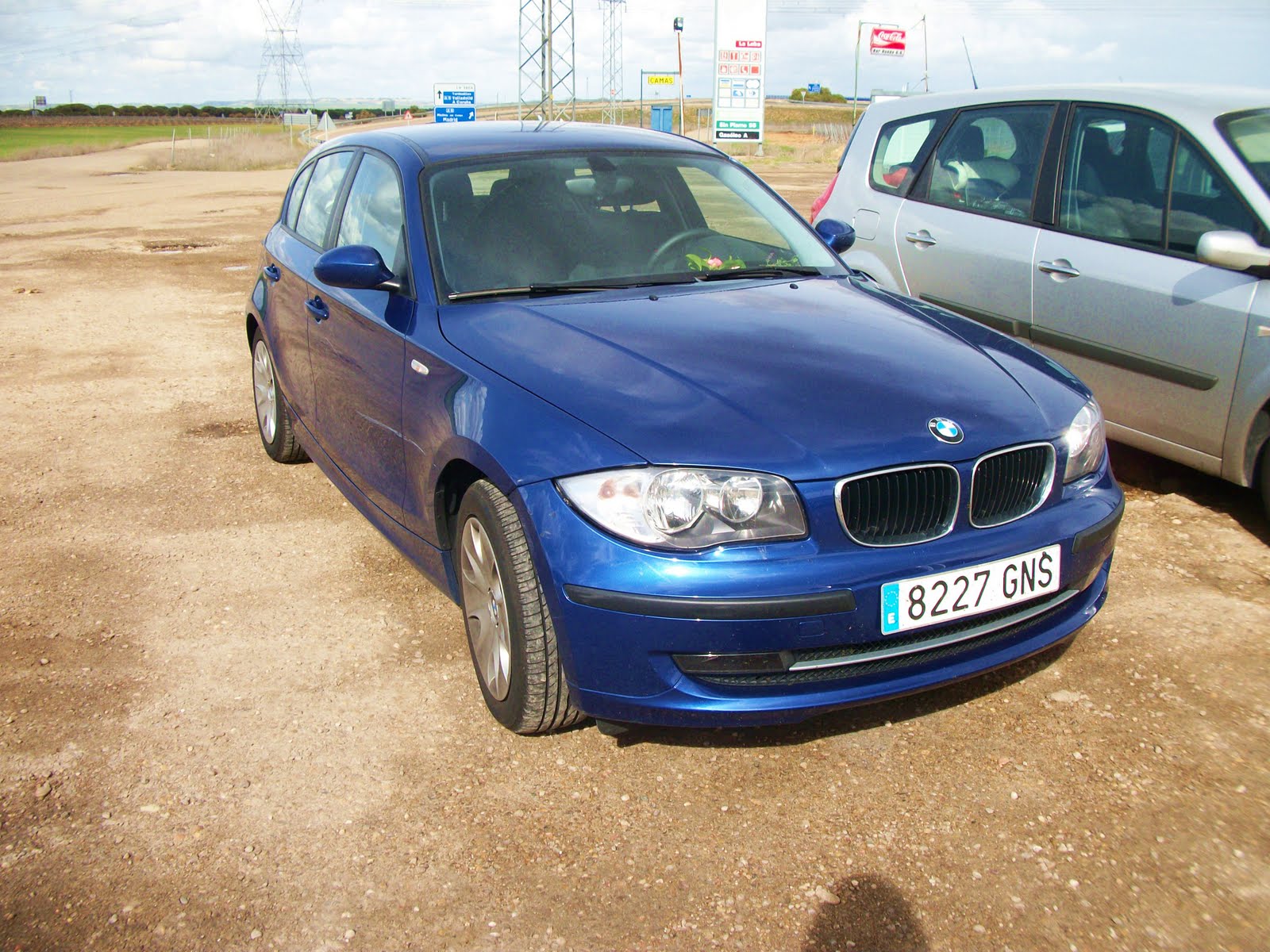 Stef said she had some other friends interested in going as well. I had heard stories of Lena, the crazy New Yorker that could put Courtney Love to shame with her antics and Sonia, the sweet litte Spanish girl that makes you wonder how she got involved with such insane Americans. So with a decent sized group of ladies, we realized the cheapest option of transport was just to rent a car. Between the 5 of us, we got a nice 4 door- BMW. Sounds fancy but Beamers here are actually quite affordable. Stef found us a really nice hotel for relatively cheap, especially since it wasn´t anywhere near tourist season.
So early Saturday morning, we all met on the subway to pick up our car. 5 hours later we arrived in Vigo. The city itself doesn´t have the majesty of Toledo or the vastness of Madrid but the countryside driving into the city itself was absolutely awe-inspiring. Rolling green hills with scattered boulders and hidden towns was something out of Don Quixote. (though Don Quixote was placed nowhere near Galicia)

 We checked into our rooms and after deciding where we were all sleeping, we took a little siesta and got ready for the night. Isabel´s sister and friends gave her some recommednations of bars and resturants we had to try. First we stopped and this nautical/ astrology themed bar with amazing drink specials and yummy tapas. We sat around the 5 of us talking about life, culture, our futures and whatnot while we steadily drank beer, wine and the bar specials. I could already tell that I was going to get along great with Lena and Sonia. Though we all had completely different personalities and backgrounds, we had many more important things in common: laughing, drinking and just having fun! This was also one of the first big experiences I'd had with Stef. After this trip, we were new partners in crime and gossip. When we had our fill, we headed off the find this amazing resturant Isabel´s sister said was a must: EL CURUXA
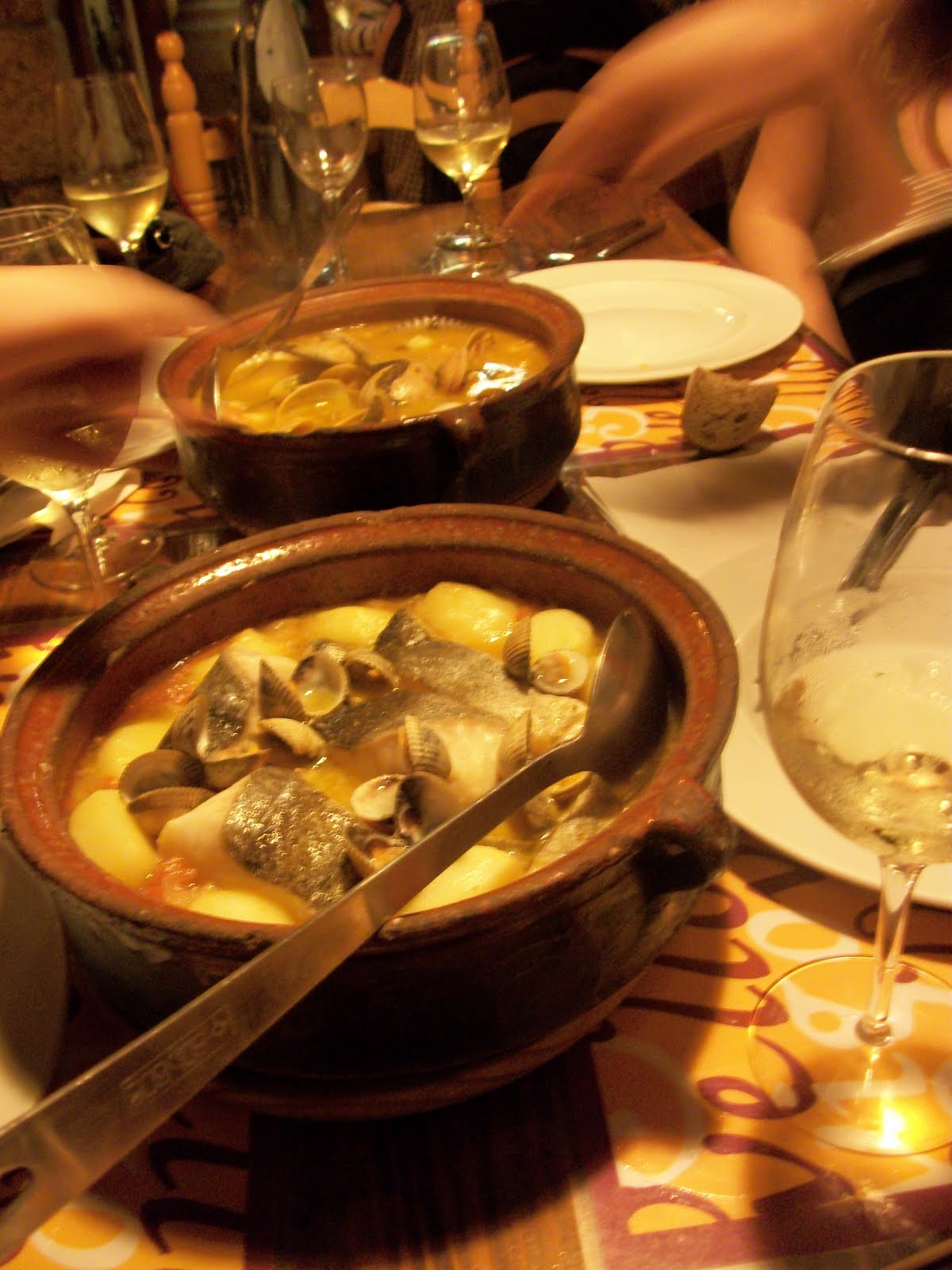


Well, the ancient part of the city is a maze of winding streets and hidden entrances. So everyother person we stopped to ask for directions sent us in the opposite direction of where we wanted to go. Eventually, we came across it and got our table. At first, I was a little disappointed and crabby. The place didn´t look like anything special, especially having walked around for like 45 minutes trying to find it. But as soon as food arrived, all my doubts disppeared. Never have I had such delicious seafood in my life. People always told me that Galicia had incredible pulpo (octopus) and mariscos (shellfish) but MADRE MÍA! Adding a few bottles of wine, it was one incredible dinner.

 Finishing our last glasses of wine, we ventured to meet one of Sonía´s old roommates from la universidad that lived in Vigo. She agreed to bring us to some of the hottest clubs in Vigo. And man, she wasn´t joking. As we arrived to the main street, we were surrounded by groups and groups of attractive men. Almost as if Vigo puts attractiveness in the water! We went bar hopping, talking up the guapos as we went. Then we arrived to 20th Century... the most amazing bar I have been to to date. Completely decked in Americana and full of single men, we spent the majority of the night in a complete haze. We finished the night at another club but I couldn´t remember much of it if you´d paid me. Around 6am the group of us came stumbling in, in amazement of Vigo´s nightlife.


The morning came ever so quickly as we all slowly climbed out of our beds to get back in the car for our long journey back to Madrid. As we individually said goodbye to each person as we got dropped off, I knew that we had done more than just bond on this super-puente. We built memories that would last a lifetime :)


30 December 2009
12 Uvas... Explaining the Tradition

I found this relly interesting article on yahoo explaining where the tradition of eating 12 grapes at midnight originates. It was in Spanish so I did my best at traslating it into English :)
¿Por qué se toman uvas el día de Nochevieja al son de las campanadas de medianoche?
Why do people eat grapes on New Years Day at the stroke of midnight?
Todos los años la misma historia. La misma imagen. Cuando se acercan las doce de la noche del 31 de diciembre, la familia al completo se agolpa alrededor de la televisión, expectante, nerviosa, armada con 12 uvas y dispuesta, este año sí, a comérselas todas. Pero, ¿por qué se toman uvas el día de Nochevieja al son de las campanadas de medianoche? ¿Por qué 12? Toda tradición tiene una explicación y ésta, en concreto, al menos cuenta con dos.
Every year the same story. The same picture. When 12 o’clock at night approaches on December 31, the family is crowded around the television, anticipating, nervous, armed with 12 grapes and prepared, this year yes, to eat all of them. But, why do people eat grapes on New Years Day at the stroke of midnight? Why 12? Every tradition has an explanation and this one, specifically, at least has two.
La más extendida asegura que el hecho de tomar uvas el día de Nochevieja se remonta a 1909, año en el que los agricultores españoles se encontraron con un excedente de cosecha considerable. Para darle salida decidieron propagar la leyenda de que comer este fruto daba buena suerte y, desde entonces, todo aquel que quiera entrar en el próximo año con buen pie debe cumplir con el ritual.
The more extended version states that the task of eating grapes on New Years Day dates back to 1909, the year in which Spanish agriculturalists were met with a surplus from a considerable harvest. In order to get rid of it, they decided to create a legend that eating this fruit gives good luck y since then, anyone that wanted to start the New Year on the right foot should complete this ritual.
 La otra historia data de finales del siglo XIX. Un grupo de ciudadanos, molestos por la decisión del alcalde de Madrid, José Abascal, de cobrar a todos aquellos que quisiesen salir a recibir a los Reyes Magos provocó que el pueblo se quedase sin la callejera fiesta y buscase una alternativa. La encontraron el día de Nochevieja, congregándose en la Puerta del Sol para comer uvas con la intención, dicen, de ridiculizar a los nobles que en tan señalada noche del año ingerían uvas y bebían champán amansalva. La pataleta de un grupo de madrileños cuajó y poco a poco se fue extendiendo por toda la geografía española. Esta histórica narración explicaría también el porqué las campanadas se retransmiten desde Madrid (aunque en los últimos años algunas cadenas de televisión han optado por otros lugares).
The other story dates back to the end of the 19th century. A group of citizens, bothered by the decision of the mayor of Madrid, Jose Abascal, to charge all of them that wanted to go out to greet the 3 Wise Men (December 6) provoked the town to stay out of the street holiday and search for an alternative. They found it on New Year’s Eve where they gathered in la Puerta de Sol in order to eat grapes with the intention, they say, to ridicule the nobles that so celebrated this night of the year by tediously consuming grapes and drinking champagne. The tantrum from the group of Madrilenos (Madridians, if you will) coagulated and little by little was extended to every part of Spain. This historical narration also explains the reason the bell clangs are broadcasted from Madrid (however in the last few years some TV stations have opted for other places)
En cuanto a la razón por la que se come una docena de uvas y no más o menos, tampoco hay consenso. Unos dicen que simbolizanlos meses del año y otros, más prosaicos, que es una por cada campanada, sin más. El caso es que cada 31 de diciembre la estampa se repite, aunque en los últimos años la tradición ha perdido parte de su malvado encanto. Las uvas ya no son lo que eran. Peladas y sin pepitas es mucho más sencillo cumplir con el ritual. Eso sí, que nadie se olvide de pedir un deseo por cada una y, por favor, no confundáis los cuartos con las campanadas.

As for the reason that they eat a dozen of grapes and no more no less, neither has a consensus. Some say that it symbolizes the months of the year and other, more mundane, that it’s one for each bell clang, no more. In any case, every December 31 the image repeats itself; however in the last few years, the tradition has lost part of its marveled enchantment. The grapes aren’t what they used to be. Peeled and without seed makes it much easier to complete the ritual. Like so, no one forgets to make a wish with each one and please, don’t confuse the living room with the bell clangs.
29 November 2009
La Noche en Blanco
Hemingway once wrote
"Nobody goes to bed in Madrid until they've killed the night".
Locals heartily practise this during White Night in Madrid. The extravaganza of arts and cultural events takes place every September full moon, between sundown and sunrise.
Over 150 activities make up the ten-hour Noche en Blanco. The entire city is taken over by live music, light projections, street theatre and more. Parks, museums and galleries stay open all night for special tours, exhibitions and interactive projects, where the public work with professionals to produce pieces of art like films or collages.The White Night (or Nuit Blanche) phenomenon started in Paris in 2002 and has since spread to other cities across the world. Brussels, Rome, Riga, and Bucharest all make up the European White Night series.
The La Noche En Blanco (The Night In White) took place in Madrid, Spain, on Saturday night September 13, and ran well into the morning of September 14. Free events of the La Noche En Blanco in Madrid, Spain are made up of some 150 free musical, film, photography, art, and theatre performances. La Noche En Blanco Brings Out Thousands and Thousands into Madrid, Spain September 13-14
Festivals are a great way to sample the flavor of a city or region when traveling. More About La Noche En Blanco (The Night In White) In Madrid, tens of thousands of people roam the streets and watch performances. It's so crowded that Metro (the subway line of Madrid, Spain) trains going into the center of town (where many of the performances took place) were jammed like sardine cans. Thankfully though, the nighttime weather was mild with a bit of a breeze.One of the main drags of Madrid, Spain, the Gran Via, was closed off to automobile traffic. It's a surreal scene, because one is so used to seeing zillions of cars on that street, which is quite intimidating. The Gran Via has many retail shops and noticeable advertising, and is a bit like Times Square or Piccadilly Circus. Off this busy avenue, on the side streets many people just hang out and drink and/or eat.
One of the free performances during the La Noche En Blanco was at the Teatro Real (Royal Theatre). Outside this Madrid, Spain tourist attraction, many chairs were set up in the plaza so people could watch the opera Caballeria Rusticana on a giant big screen television that was attached to the theatre. This is usually culturally important for some Americans because this opera is featured in The Godfather, Part III.
As you walk the streets of Madrid, Spain, you'll notice a lot of street performers, some performing music and others dressed up in costumes trying to get reactions from people. The police patrol in cars and on foot en masse for this event. There are some interesting works of art at the CaixaForum that this year included a graffiti-inspired exhibition. Outside this cultural center, various graffiti designs were being displayed on the building while dramatic music played. A constant stream of people was coming and going to and from this exhibition called Graffiti Virtual. Being a part of the La Noche En Blanco in Madrid, Spain is something you will long remember. Festivals really bring the people out, and travelers would take heed to attend these events and get a fuller appreciation of a country's culture.
Personal Experience:
For weeks, I saw huge signs on every corner of Madrid advertising this Noche en Blanco. I asked around my work about what exactly this night was about. I was told that it was a cultural night where all the museums, libraries and stores are open all night. Most of the time, there was no entrance fees; however, the good places like La Biblioteca Nacional (Library), El Prado Museo and La Reina Sofia Museo (Museums) are jammed packed full of people by 10 pm. I was still intrigued but all my friends, having participated in previous Noches en Blanco, weren't too keen on the huge crowds. Well, I went along with their advice and enjoyed the local festivities around my barrio.

I pregramed at my place till around 11pm as I got ready: a customery routine that I kept from the US-- haha. I met up a little later with Devin and one of his friends. We strolled around Malasana doing a mini-botellon while we took in some of the live performances and crowds of people. Then we went to a little 'house party' at one of our friends. A group of about 10 sat around drinking and talking. When it got to be around 1ish, we all left to hit the bars around Malasana. By this time, all of us were pretty well 'hydrated.' There had previously been some tension between Devin's friend and some of the other people which came to a climax on the way to one of the bars. But after a few dramatic moments, everything was settled and we continued our night. 

 Being the 'White Night,' most of us were dressed in.... well, white. Club promoters were handing out free promtional things like posters and masks in order to draw in the crowds. Lines for most of the good discotecas were insane. The group of us were standing outside one for a good 15 minutes; that was until I felt the 'call of nature.' Luckily, Dev was in the same predictament so we left the line for a few minutes. When we got back, our group of friends had disappeared. So we ventured off to some other bars for awhile until we eventually ran-into the group at another bar. It was a crazy fantastic night. Everyone was just full of excitement and voldka which always makes for a 'interesting' night.
 I strolled back to my apartment around 6 am after the last bars closed down. It was one of the best nights I had in Madrid to date. It was one of my first weekends in Madrid so also one of the first times I was really able to socialize with my friends I had made from work. I wish I had done more culturally important things but overall, I had an amazing first Noche en Blanco!
18 July 2009
Cultural Tricks of the Trade
Figured I'd start a segment about some of the big cultural differences between the United States and Spain... enjoy!
The water and lighting situation will get its own paragraph because it is quite important. First and foremost, when you leave a room, turn off the light! Even if you are coming back 30 seconds later, just turn off the light. I have a bad habit of this and I know my roommates are going to ride me. Never leave the hallway light on unless you’re in the hallway. Getting ready for the night, don’t leave both your bedroom and bathroom light on even if you’re walking back and forth getting dressed and doing your hair. If there’s still daylight, don’t even consider turning on a single light in the apartment unless there are absolutely no windows in that particular room. I’m not trying to make the Spanish seem anal but this is their culture so you have to respect it. Alright, now let’s explain the water debacle. First off, water heaters don’t really exist in most apartment buildings. The Spanish use propane tanks to heat their water. It’s literally a tank that’s usually in a kitchen cabinet that must be turned on and lit with a match when you want hot water or to use the oven. When you run out of gas, you put the empty tank outside your door with some money and the propane man will bring you a new one. (So the running joke here is not the milk man but the gas man) For this reason, showers are a unique trick one must learn. This is what I do. Standing outside the shower, I turn on the water and put my hair under the faucet/ shower head. Turn the water off and put shampoo in my hair. This is because at first the water is still cold but I don’t want to waste it. So as I lather in the shampoo, I step into the shower. By now some water should have warmed up; so I turn the water back on and rinse. Turn the water off and put in conditioner. Turn it on and rinse and then quickly wash my body. I haven’t found a water conservative way of shaving my legs yet but I’ll be sure so let you know. It sounds ridiculous but it saves so much money on propane and your water bill that you’ll learn to love it.

The daily schedule in Spain definitely takes some getting used to. It took me the majority of the time studying abroad to get the schedule down. This time has been a bit easier but because I live independently, I tend to mix a little bit of the American lifestyle with the Spanish. On days that I don’t work early, I get up around 10-11am. I usually eat a very small breakfast consisting of a bowl of cereal, a piece of fruit or some type of muffin. I shower, clean and run some errands. Around 2:30-3pm, I eat lunch. Lunch here is a very large meal: equal to that of America’s dinner. Here I tend to vary that because I am still a ham and cheese sandwich type of girl. Then comes siesta time. If I don’t work at all, I’ll go back to sleep till about 6pm. If I teach in the evening, this is when I usually hop on my bus to Madrid and take a nap on there. It’s not that I’m lazy or really need a nap; it’s just what you do. Every store and business closes down from about 2-5pm.

So there is nothing to do but nap. I spend majority of my evenings at work till about 9pm and then I take the bus back to Toledo; I’ll get home around 11pm. Again, if I don’t work, I’ll clean, take a long walk, catch up on some blogging, emails or watch a movie. Either way, around 10 or 11ish I cook dinner. If I work all day, I usually prepare some food earlier and keep it in the fridge so I can just heat it up. 9-10:30pm is the usual dinner time in Spain. It would seem extremely unhealthy, but honestly it works out quite well. Dinner is still a big meal but not as big as lunch. More of your heavy carb foods like pasta are eaten at lunch. Dinner is usually your meat and veggies meal. Midnight to 1am is my typical bedtime. If it’s the weekend, the earliest time you can hit the bars is midnight. That’s pushing it but because dinner is eaten to late, you also need time to get ready. The average time to be in bed on the weekends is 4-5am. This is probably why the siesta is so important. If you go to a sit-down/ lounge type area, with every drink, you get a tapa (a free small portion of food)… not at the discotecas ‘dance clubs’ though.
Another issue I want to share is Spain’s policy of public displays of affection. This is one culture difference that no matter how many years I live in Spain, I will never become adjusted. Here it doesn’t matter if your 16 or 60; if you’re in the mood for a make out session, you have the freedom to stop and have one wherever and whenever you like. I cannot tell you how many times I’ve been sitting by a couple on the bus or metro when they begin swallowing each others faces. I never realized how ‘prude’ I was until I came to Spain. The people here have no inhibitions when it comes to their libidos. You can be in the middle of a crowded room making out with whoever you want. I realized that every time I see these awkward displays I always have the same disgusted look on my face like “Get a room already.” It is more common for younger couples: late teens to late twenties but you’ll see your occasional old person sucking face with someone who looks like your grandmother. It never ceases to amaze me. So let me share some of my experiences:
I was sitting on the bus going to work in Madrid when this couple comes and sits in the row right in front of me. Of course, there were like 5 consecutive open rows behind but they had to sit by me. Not 10 minutes into the 45 minute bus ride do they start going at it like rabid dogs. I mean tongues, hands and sound effects… the whole shebang. If they were any closer to me, I would have been able to feel their breath on my face. I was dumbfounded; I had no idea what to do. Awkwardly move to another row or endure the rest of the trip with this hormonal uprising. (I reluctantly stayed and kept my eyes locked on my paperwork sitting in my lap)
Here’s another example. Walking into the bus station a few weeks ago, there’s this couple standing at the top of the stairwell going at it and blocking all the people trying to get to the buses. It’s not like it’s a small bus station with nowhere to stand; there are multiple sitting areas with probably 50 chairs.
So I guess this is why it bothers me so much. It’s not their display of affection just the manner in which they decide to show it. Go to an unpopulated corner or at least limit your activity until you get to a private place. But no, the Spanish will start whenever the mood strikes them: next to old people at a bus stop, in front of small children at a park, in the crowded streets of Madrid surrounded by hundreds of people.
Well I can guarantee that there will be more cultural differences that I will explain, but these are just a few to help you understand. Enjoy and I’ll keep you posted from Espana!
Subscribe to:
Posts (Atom)